

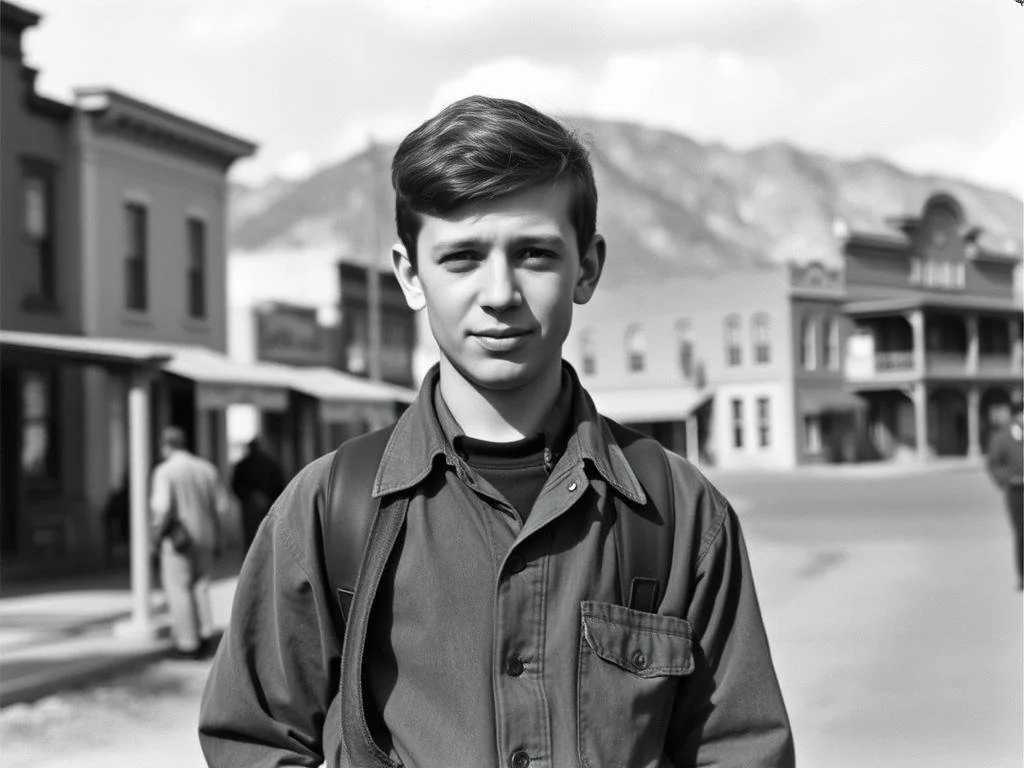
Richard Bruce “Dick” Cheney stands as one of the most consequential figures in modern American politics. From his humble beginnings in Wyoming to becoming arguably the most powerful vice president in U.S. history, Cheney’s career spanned decades of pivotal moments that shaped American policy both domestically and abroad. His unwavering conservative convictions and expansive view of executive power left an indelible mark on the nation, particularly during the tumultuous years following the September 11 attacks.
Early Life and Education
Cheney grew up in Casper, Wyoming, where he developed the values that would shape his political career.
Born on January 30, 1941, in Lincoln, Nebraska, Dick Cheney was the son of a soil conservation agent for the U.S. Department of Agriculture. His family moved to Casper, Wyoming, when he was young, a place that would become central to his identity and later political career.
Cheney’s early life gave little indication of his future prominence. As a popular student at Natrona County High School, he served as senior class president and co-captain of the football team. It was there he met his future wife, Lynne Vincent, beginning a partnership that would span over six decades.

Dick Cheney and his future wife Lynne Vincent at their high school prom in 1959.
His academic journey began with promise but faced early setbacks. Awarded a scholarship to Yale University, Cheney struggled academically and left after a year and a half with failing grades. This period also included two arrests for driving under the influence, incidents he later acknowledged as youthful mistakes.
Returning to Wyoming, Cheney worked as a lineman for a power company before finding his footing. With encouragement from Lynne, whom he married in 1964, he enrolled at the University of Wyoming, where he earned both bachelor’s and master’s degrees in political science. He later pursued doctoral studies at the University of Wisconsin, though he departed before completing his Ph.D. to pursue opportunities in Washington.
Political Rise Through White House Staff and Congress
Cheney’s political career began in 1969 when he secured an internship in Washington during the Nixon administration. His talent for policy analysis and political acumen quickly caught the attention of Donald Rumsfeld, then director of the Office of Economic Opportunity. This connection would prove pivotal throughout his career.

At just 34, Cheney became the youngest White House Chief of Staff in history under President Gerald Ford.
When Rumsfeld became President Gerald Ford’s chief of staff in 1974, he brought Cheney along as his deputy. Just a year later, at the remarkably young age of 34, Cheney succeeded Rumsfeld as White House chief of staff, becoming the youngest person ever to hold that influential position.
Following Ford’s defeat in the 1976 presidential election, Cheney returned to Wyoming and successfully ran for the state’s lone congressional seat in 1978. This victory came despite suffering his first heart attack during the campaign, beginning a lifelong battle with cardiovascular disease.
Cheney served six terms in the House of Representatives, establishing himself as a reliable conservative voice. His colleagues recognized his leadership abilities, electing him House Republican Conference Chairman in 1987. By 1989, he had risen to become House Republican Whip, the second-highest position in the party’s House leadership.
Throughout his congressional career, Cheney maintained a consistently conservative voting record. He opposed sanctions against apartheid South Africa, supported aid to the Nicaraguan Contras, and advocated for strong defense spending. His reputation for seriousness and competence earned respect across the political spectrum, even from those who disagreed with his positions.

As a congressman, Cheney established himself as a staunch conservative and skilled political operator.
Tenure as Secretary of Defense Under George H.W. Bush
In 1989, Cheney’s career took another significant turn when President George H.W. Bush nominated him to serve as Secretary of Defense. The nomination came after Bush’s first choice, John Tower, failed to secure Senate confirmation. Cheney, with his reputation for competence and his good relationships on Capitol Hill, was confirmed unanimously.

As Defense Secretary, Cheney oversaw Operation Desert Storm and the U.S. military response to Iraq’s invasion of Kuwait.
Cheney’s tenure at the Pentagon coincided with momentous global changes. The Berlin Wall fell just months after he took office, signaling the beginning of the end of the Cold War. As the Soviet Union disintegrated, Cheney oversaw significant reductions in U.S. military forces and spending, though he maintained that America needed to preserve its military strength in an uncertain world.
His most visible challenge came in August 1990, when Iraq invaded Kuwait. Cheney played a crucial role in building the international coalition that would ultimately drive Iraqi forces from Kuwait in Operation Desert Storm. Working closely with General Colin Powell, then Chairman of the Joint Chiefs of Staff, Cheney helped plan and execute a swift military campaign that showcased American military dominance.

Cheney worked closely with General Colin Powell during the Gulf War.
Interestingly, Cheney supported the decision not to pursue Iraqi forces all the way to Baghdad or attempt to remove Saddam Hussein from power. In a 1994 interview, he explained this position: “The notion that we ought to now go to Baghdad and somehow take control of the country strikes me as an extremely serious one in terms of what we’d have to do once we got there. You’d probably have to put some new government in place. It’s not clear what kind of government that would be, how long you’d have to stay.”
This cautious approach to regime change in Iraq stands in stark contrast to the position he would later advocate as vice president. His evolution on this issue would become one of the most discussed aspects of his political legacy.
Private Sector Interlude
When Bill Clinton defeated George H.W. Bush in 1992, Cheney left government service for the private sector. After briefly considering a presidential run for the 1996 election, he instead accepted the position of CEO at Halliburton Company, a major oil services corporation based in Dallas, Texas.

Between his government service periods, Cheney served as CEO of Halliburton from 1995 to 2000.
Under Cheney’s leadership from 1995 to 2000, Halliburton expanded its global operations and nearly doubled in size through mergers and acquisitions. His business experience added another dimension to his resume, though his tenure at Halliburton would later become controversial during his vice presidency when the company received numerous government contracts in Iraq after the 2003 invasion.
During this period, Cheney maintained his connections to Republican politics and foreign policy circles. He served on the board of the American Enterprise Institute, a conservative think tank, and kept close ties with many who would later join the George W. Bush administration.
Role as Vice President Under George W. Bush (2001-2009)
In 2000, Texas Governor George W. Bush asked Cheney to lead his search for a running mate. After an extensive vetting process, Bush made the surprising announcement that Cheney himself would join the ticket. This selection immediately signaled that Bush valued experience and Washington knowledge in his potential administration.

Bush and Cheney at the 2000 Republican National Convention after Cheney was selected as the vice presidential nominee.
Following the contentious 2000 election, which was ultimately decided by the Supreme Court, Cheney immediately established himself as an unusually powerful vice president. He assembled a significant personal staff and secured office space both in the West Wing and in the Senate—a physical manifestation of his dual influence in both the executive and legislative branches.
Expanding Vice Presidential Power
Cheney fundamentally transformed the vice presidency, expanding its influence far beyond the ceremonial role it had often been in previous administrations. He became a key architect of administration policy, particularly in national security and energy matters.
His approach to governance was shaped by his experience in the Ford administration, which had followed the Watergate scandal. Cheney believed that presidential powers had been excessively constrained by Congress in the post-Watergate era, and he worked consistently to restore and expand executive authority.
In the early months of the administration, Cheney led the National Energy Policy Development Group, commonly known as the “Energy Task Force.” The group’s work was conducted with significant secrecy, leading to legal challenges that went all the way to the Supreme Court regarding the disclosure of its proceedings.

Cheney wielded unprecedented influence as vice president, particularly in national security matters.
September 11 and the War on Terror
The terrorist attacks of September 11, 2001, profoundly shaped Cheney’s vice presidency. On that morning, with President Bush in Florida, Cheney directed the immediate crisis response from a bunker beneath the White House. He gave the extraordinary authorization to shoot down civilian aircraft if they appeared to be under terrorist control and headed toward Washington.

Cheney in the Presidential Emergency Operations Center on September 11, 2001, directing the government’s immediate response to the terrorist attacks.
In the aftermath of the attacks, Cheney became the administration’s most forceful advocate for an aggressive response to terrorism. He championed what became known as the “one percent doctrine”—the idea that even if there was just a one percent chance of terrorists obtaining weapons of mass destruction, the United States must respond as if it were a certainty.
This philosophy underpinned many controversial policies, including enhanced interrogation techniques that critics characterized as torture, warrantless surveillance programs, and the detention of enemy combatants at Guantanamo Bay without trial. Cheney consistently defended these measures as necessary to prevent further attacks.
The Iraq War
Perhaps most consequentially, Cheney became the leading advocate within the administration for military action against Iraq. He repeatedly asserted that Saddam Hussein possessed weapons of mass destruction and had links to al-Qaeda—claims that were later discredited.

Cheney was a leading advocate for the Iraq War and made several visits to troops deployed in the region.
When the United States invaded Iraq in March 2003, Cheney predicted that American forces would be “greeted as liberators.” As the war dragged on and insurgency grew, this optimistic assessment proved dramatically incorrect. Nevertheless, Cheney remained a steadfast defender of the war, even as public support waned and other administration officials expressed doubts.
His influence within the administration appeared to diminish somewhat during Bush’s second term, as more moderate voices gained influence in foreign policy. However, he continued to advocate for aggressive policies toward Iran and other perceived threats.
Key Policies and Controversies
Executive Power
Throughout his vice presidency, Cheney championed an expansive view of executive authority, particularly in wartime. Working with legal advisers like David Addington and John Yoo, he advanced the “unitary executive theory,” which holds that the Constitution grants the president complete control over the executive branch.

Cheney consistently advocated for broad executive powers, especially in matters of national security.
This theory provided the legal foundation for many controversial programs, including the detention of enemy combatants without trial and the NSA’s warrantless surveillance program. Cheney argued that such measures were within the president’s inherent powers as commander-in-chief during wartime.
Energy Policy
As head of the administration’s Energy Task Force, Cheney developed policies that emphasized increased domestic production of fossil fuels and reduced regulatory barriers for energy companies. Environmental groups criticized the task force for its close consultation with industry executives while excluding environmental perspectives.

Cheney led the administration’s Energy Task Force, which emphasized increased domestic energy production.
The secrecy surrounding the task force’s deliberations led to a legal battle that reached the Supreme Court in Cheney v. United States District Court (2004). The Court largely sided with the administration, ruling that the Vice President did not have to disclose the details of the task force’s internal discussions.
Critics noted that many of the task force’s recommendations aligned with the interests of Cheney’s former employer, Halliburton, raising concerns about conflicts of interest. Cheney maintained that his financial ties to the company had been severed when he became vice president.
Surveillance and Intelligence
Following the September 11 attacks, Cheney was instrumental in establishing expanded surveillance programs to detect terrorist threats. The most controversial of these was the NSA’s warrantless surveillance program, which monitored communications between the United States and foreign countries without court approval.
When the program was revealed by the New York Times in 2005, it sparked intense debate about the balance between security and civil liberties. Cheney vigorously defended the program as essential to national security and legally justified under the president’s war powers.
The Valerie Plame Affair
One of the most damaging controversies of Cheney’s vice presidency involved the exposure of CIA officer Valerie Plame’s identity. After Plame’s husband, former ambassador Joseph Wilson, published an op-ed challenging the administration’s claims about Iraq seeking uranium from Niger, Plame’s covert status was leaked to journalists.

Lewis “Scooter” Libby, Cheney’s chief of staff, was convicted of perjury and obstruction of justice in the Valerie Plame case.
The subsequent investigation led to the conviction of Cheney’s chief of staff, Lewis “Scooter” Libby, for perjury and obstruction of justice. While Cheney pressed for a presidential pardon for Libby, President Bush only commuted his sentence. This created tension between the two men in their final months in office.
Post-Vice Presidency Activities and Public Statements
After leaving office in January 2009, Cheney remained an outspoken critic of the Obama administration, particularly on national security issues. Unlike many former officials who observe a period of silence about their successors, Cheney quickly and forcefully criticized President Obama’s policies on terrorism, Guantanamo Bay, and interrogation techniques.

After leaving office, Cheney remained an active voice in conservative policy circles.
In 2011, he published his memoir, “In My Time,” which defended his record and offered few regrets about controversial decisions. The book reinforced his reputation as unapologetic about his hardline positions.
Changing Family Dynamics and Political Shifts
Cheney’s post-vice presidency was also marked by a notable evolution on social issues, influenced by his family circumstances. His younger daughter, Mary, is gay, and Cheney had long expressed support for her while maintaining that marriage should be defined at the state level.
In 2013, when his older daughter Liz ran for a Senate seat in Wyoming and stated her opposition to same-sex marriage, it created a public family rift. Mary and her wife publicly criticized Liz’s position, highlighting the personal complexities behind political stances.
Perhaps most surprisingly, Cheney—once the embodiment of Republican orthodoxy—became an outspoken critic of Donald Trump. After the January 6, 2021, attack on the U.S. Capitol, Cheney strongly condemned Trump and supported his daughter Liz’s role on the House committee investigating the events.

Cheney supported his daughter Liz in her opposition to Donald Trump after the January 6 Capitol attack.
In a campaign ad for Liz in 2022, Cheney declared: “In our nation’s 246-year history, there has never been an individual who is a greater threat to our republic than Donald Trump.” This remarkable statement from a lifelong Republican underscored how dramatically American politics had changed since his time in office.
In 2024, Cheney took the extraordinary step of endorsing Democratic candidate Kamala Harris for president over Trump, stating that he would be voting for a Democrat for the first time in his life because of the threat he believed Trump posed to American democracy.
Health Issues and Personal Life
Throughout his adult life, Cheney battled serious cardiovascular disease. His first heart attack occurred in 1978 at age 37, while he was running for Congress. He would suffer four more heart attacks over the years: in 1984, 1988, 2000, and 2010.

Cheney became an advocate for heart health awareness after his own struggles with cardiovascular disease.
During his vice presidency, Cheney’s health was a constant concern. He had a special defibrillator implanted in his chest, and he later revealed that he had the device’s wireless function disabled out of fear that terrorists might hack it to induce a fatal heart attack—a precaution that highlighted his security-focused mindset.
In 2012, after suffering from end-stage heart failure, Cheney received a heart transplant at age 71. The procedure gave him a new lease on life, and he later expressed profound gratitude for the donor and medical team that made it possible.

Cheney with his wife Lynne, who has been by his side throughout his political career and health challenges.
In his personal life, Cheney’s marriage to Lynne Vincent Cheney remained a constant throughout his career. Lynne, an accomplished author and scholar in her own right, served as chair of the National Endowment for the Humanities from 1986 to 1993.
The couple had two daughters, Liz and Mary. Liz followed her father into politics, serving as a State Department official before being elected to the House of Representatives from Wyoming in 2016. Mary worked in the private sector and as an LGBTQ rights advocate.
Outside of politics, Cheney was an avid fly fisherman and hunter. His hunting accident in 2006, when he accidentally shot attorney Harry Whittington during a quail hunt in Texas, became a source of late-night comedy but was a deeply embarrassing incident for the normally careful Cheney.
Historical Assessment and Legacy
Dick Cheney’s legacy remains deeply contested, reflecting the polarized nature of American politics during and after his time in office. Supporters credit him with helping keep America safe after 9/11 and praise his unwavering commitment to his principles. Critics argue that his policies damaged American values, international standing, and long-term security interests.

Cheney’s legacy as vice president remains controversial and deeply contested in American political discourse.
Transformation of the Vice Presidency
Perhaps Cheney’s most undisputed legacy is his transformation of the vice presidency itself. He expanded the office’s influence far beyond its traditional boundaries, creating a model of vice presidential power that subsequent officeholders have had to reckon with, even if they haven’t fully emulated it.
Historian Joel K. Goldstein described Cheney as “the most influential vice president in American history,” noting that he “served as a virtual prime minister” during the Bush administration’s first term. This assessment is shared across the political spectrum, even by those who disagree with how Cheney used his influence.
National Security and Executive Power
On national security, Cheney’s legacy is more contested. His advocates argue that the absence of another major terrorist attack on U.S. soil during the Bush administration validates the tough measures he championed. Former Defense Secretary Donald Rumsfeld maintained that enhanced interrogation techniques produced valuable intelligence that saved American lives.
Critics counter that these policies undermined American values and actually harmed counterterrorism efforts by alienating allies and serving as recruitment tools for terrorist organizations. The Senate Intelligence Committee’s 2014 report concluded that enhanced interrogation techniques were not effective and that the CIA had misled policymakers about their utility.

Cheney’s national security policies sparked significant protests and remain controversial.
The Iraq War
The Iraq War, which Cheney championed, stands as perhaps the most controversial aspect of his legacy. The conflict cost thousands of American lives and hundreds of thousands of Iraqi lives, destabilized the Middle East, and drained trillions from the U.S. treasury.
The failure to find weapons of mass destruction—the primary justification for the war—severely damaged the credibility of both Cheney and the Bush administration. Critics argue that Cheney’s office pressured intelligence agencies to support a predetermined policy of regime change, while supporters maintain that the intelligence failure was genuine and widespread.
Political Evolution
Ironically, Cheney’s late-career break with Donald Trump and the Republican Party he helped shape represents another significant aspect of his legacy. His willingness to stand against his party when he believed democracy was at stake has earned him respect from some former critics, while alienating him from the party’s current base.

In his later years, Cheney became an outspoken defender of traditional democratic norms against populist challenges.
This evolution highlights the dramatic changes in American politics since Cheney’s time in office. Many of the neoconservative and traditional Republican positions he championed have been supplanted by populist and nationalist approaches that he ultimately rejected.
Final Assessment
Ultimately, Dick Cheney’s legacy reflects the complexities and contradictions of American power in the early 21st century. He was a figure of remarkable influence who helped shape an era of American history, for better or worse. His unwavering certainty in his own judgments—even in the face of contrary evidence—defined both his strengths and weaknesses as a leader.
As time passes and emotions cool, historians will continue to debate Cheney’s place in American history. What remains undisputed is that few vice presidents have left such a profound and lasting impact on the nation and its institutions.
Conclusion
Dick Cheney’s journey from a Wyoming lineman to one of the most powerful figures in American government represents a remarkable American story. His career spanned decades of pivotal moments in U.S. history, from the post-Watergate era through the Cold War’s end and into the age of terrorism.
Throughout his life in public service, Cheney remained steadfast in his conservative principles and his belief in a strong executive branch. His influence on American policy, particularly in the critical years following September 11, 2001, was profound and far-reaching.
Whether viewed as a principled patriot who kept America safe in dangerous times or as an architect of flawed policies that damaged American interests and values, Dick Cheney stands as one of the most consequential vice presidents in American history. His legacy will continue to be studied, debated, and reassessed for generations to come.
Further Reading on Dick Cheney
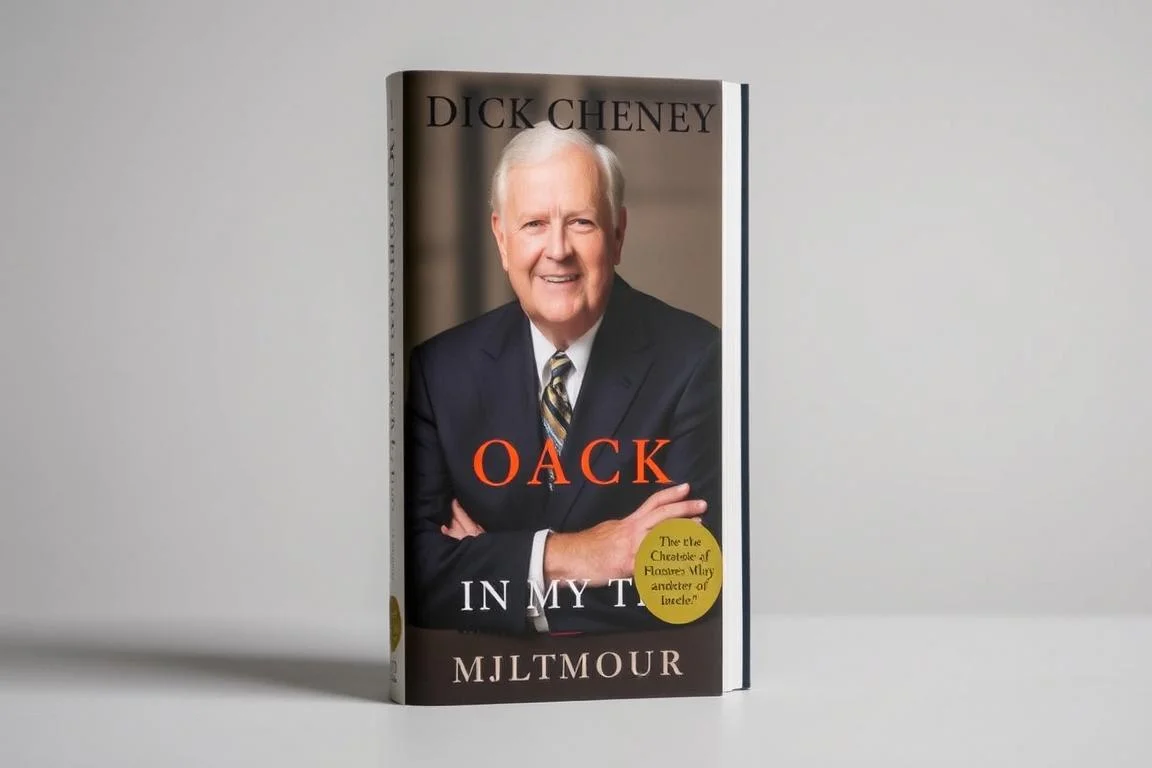
In My Time: A Personal and Political Memoir
Dick Cheney’s autobiography provides his personal account of his career and the key decisions of the Bush administration.

Angler: The Cheney Vice Presidency
Pulitzer Prize-winning journalist Barton Gellman’s detailed examination of Cheney’s unprecedented influence as vice president.

Days of Fire: Bush and Cheney in the White House
New York Times correspondent Peter Baker’s comprehensive account of the Bush-Cheney partnership and administration.


Leave a Reply